Sushi Saito Bangkok Review: A 10/10 Otoro at the Four Seasons, by the River (8.5/10)
Authentic, excellent sushi at a seven-seat counter by the river, with a 10/10 otoro, but pricey. 8.5 out of 10.
Bangkok, Thailand BKKAll of Bangkok →
Save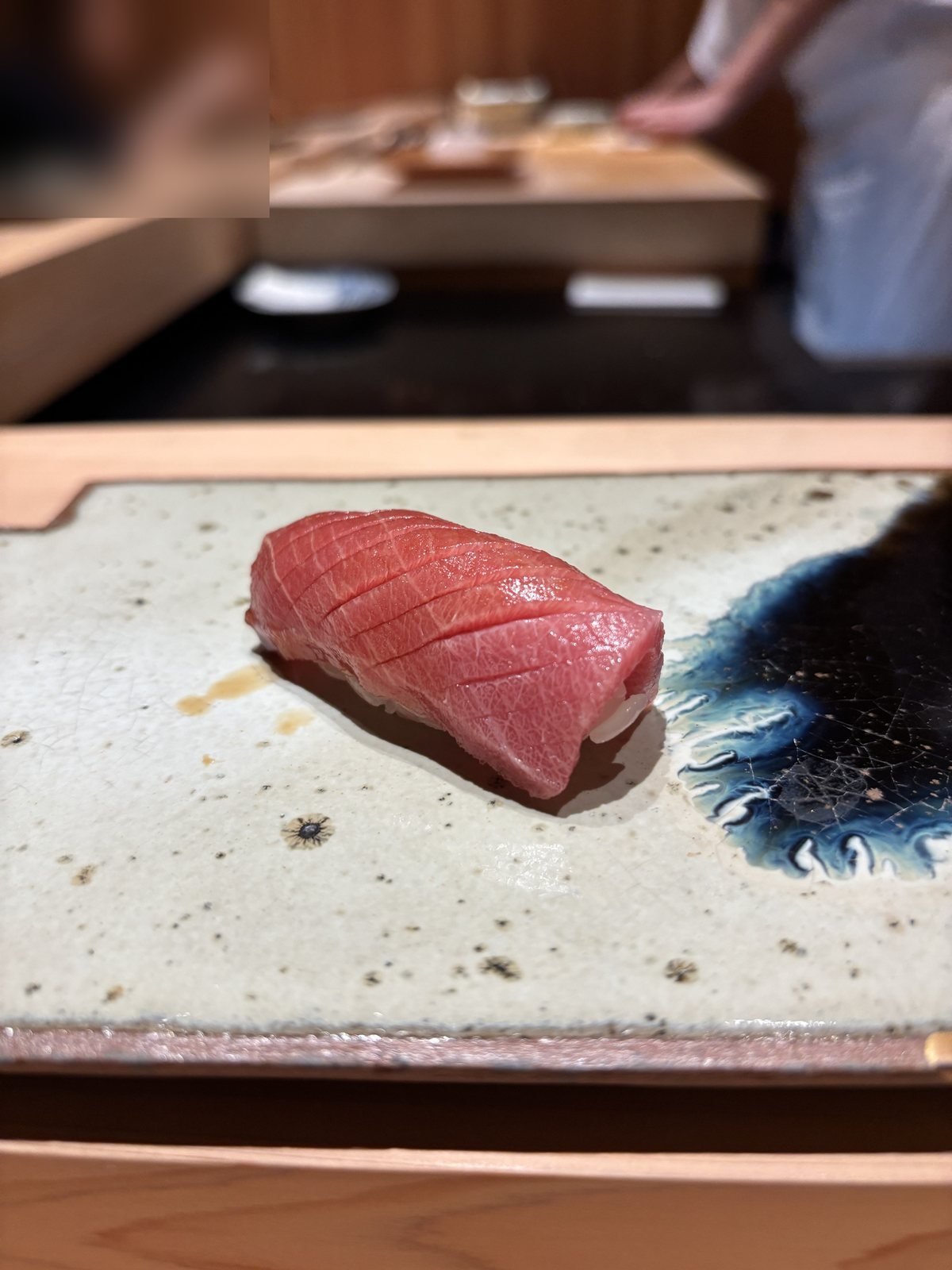
Ranked #9 of 31 in my guide: Where to Eat in Bangkok →
The short version: Sushi Saito is the Bangkok branch of Takashi Saito’s Tokyo sushi restaurant, at the Four Seasons, right by the river. It’s very authentic, with Japanese chefs and only seven seats at the counter, and the sushi is excellent. The otoro was a 10, and the kue, white shrimp, mackerel, salmon roe and tuna roll were all 9s. The service is more traditional and attentive than warm, and it’s pricey: lunch was ฿6,826.60, about $207, for one. 8.5 out of 10.
I had the lunch omakase on November 15, 2026, while staying at the Four Seasons, and I paid for it myself.
The setting: 9 out of 10
I love the setting, which is very authentic Japanese style, small and intimate, with only seven seats at the counter. It’s inside the Four Seasons, right on the riverfront. There’s no riverfront seating, but it’s quite a nice spot to be in, and the whole area is quiet and peaceful.
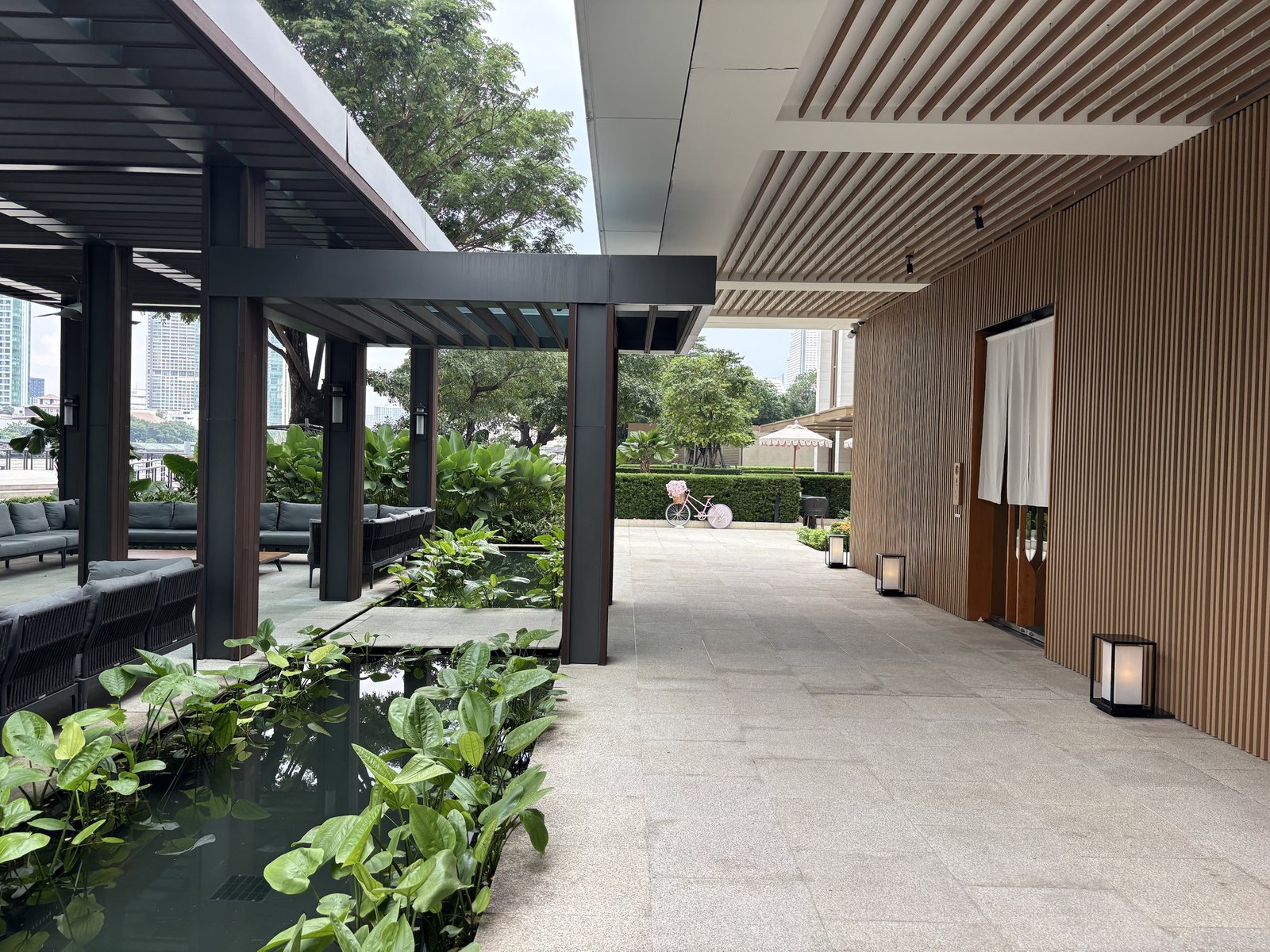
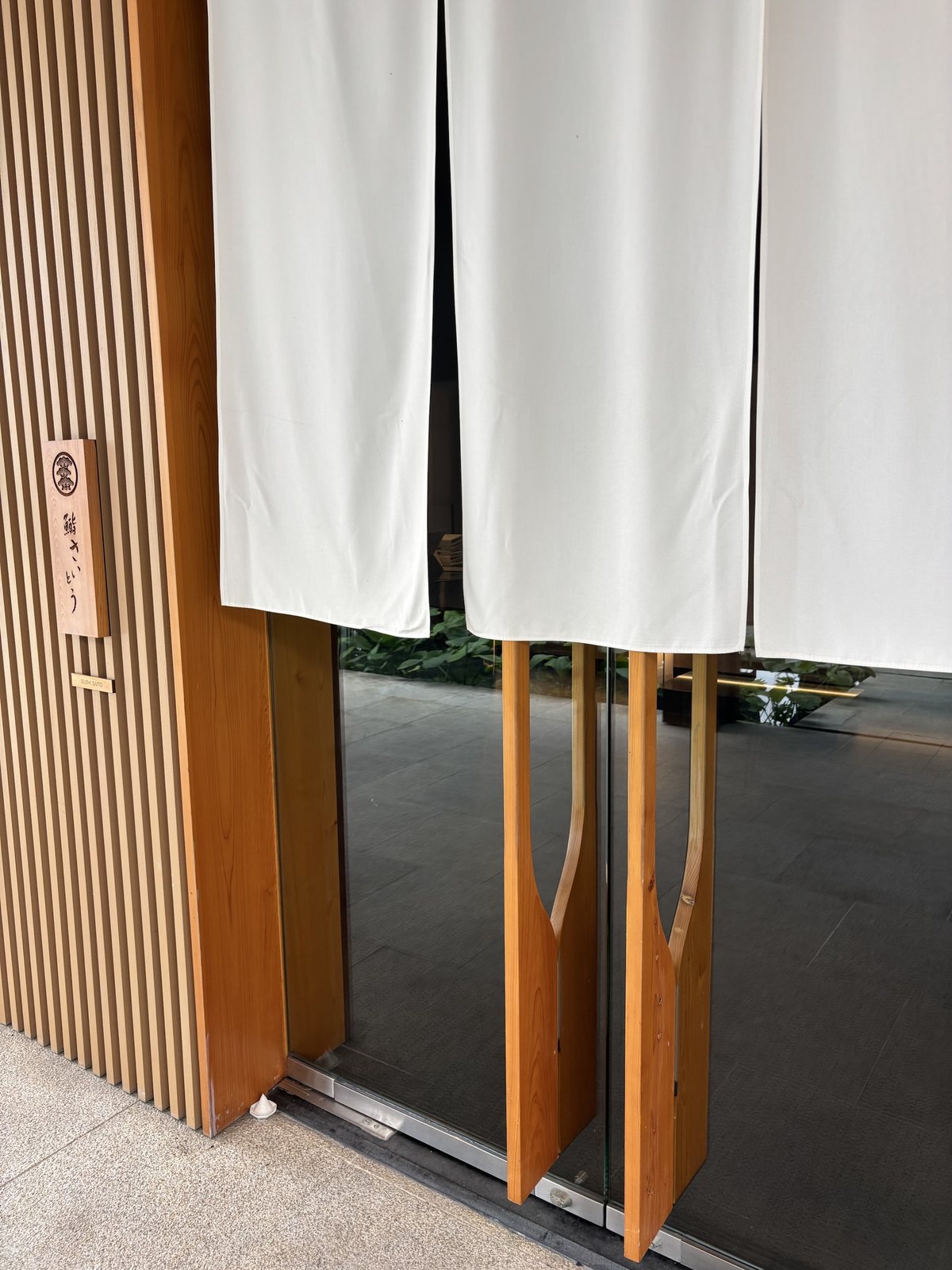
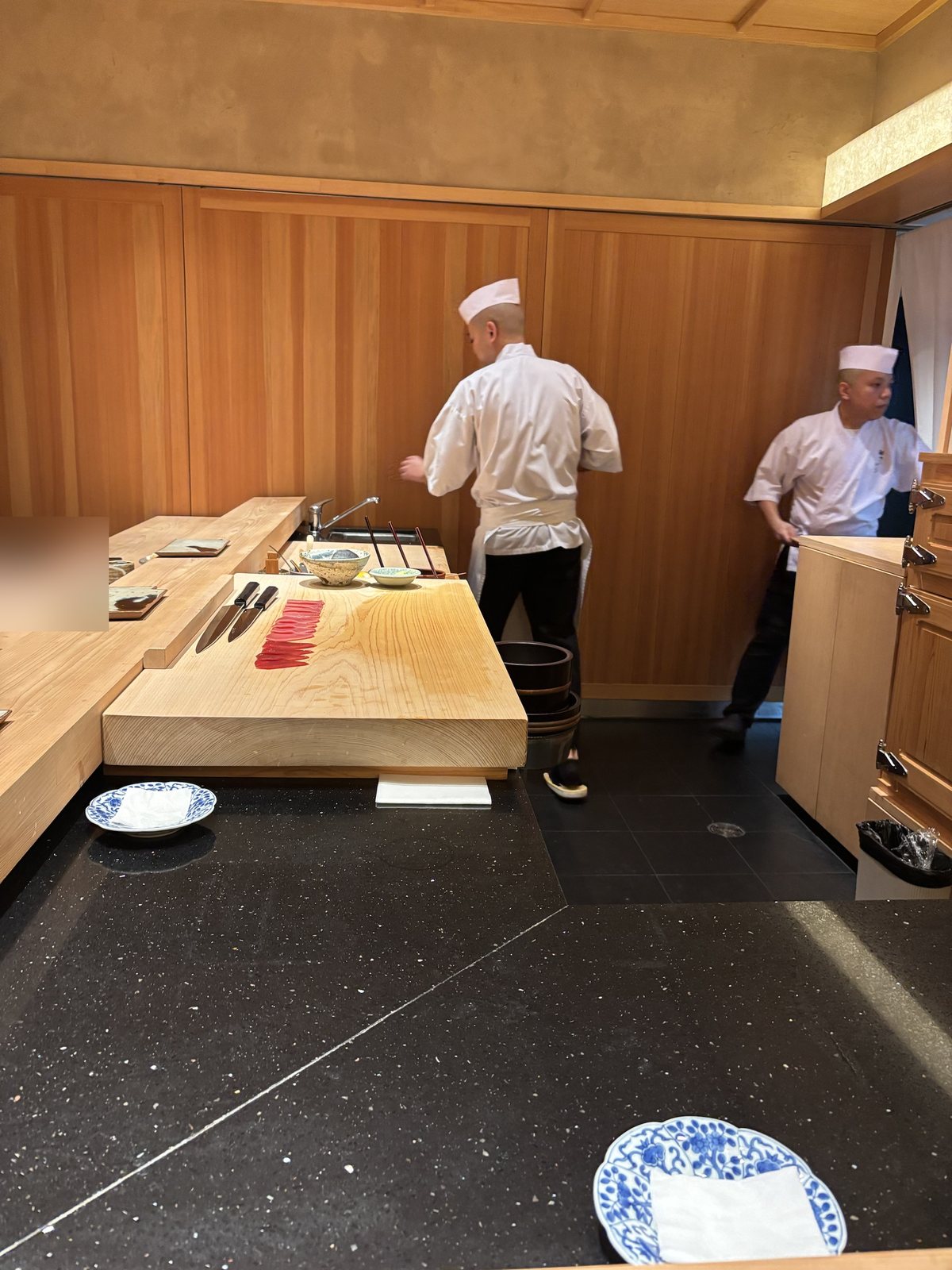
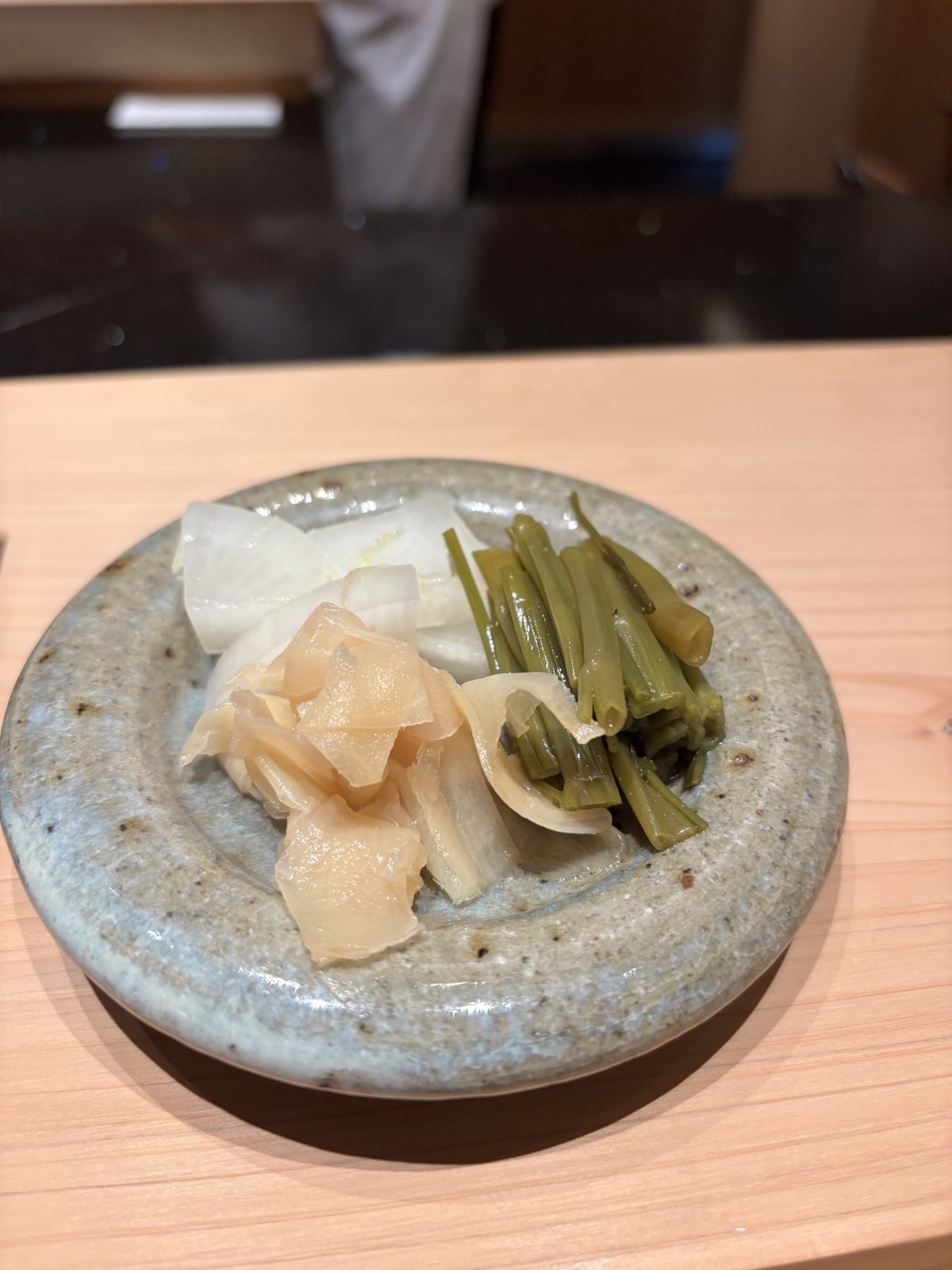
Outside, there’s a nice seating area that isn’t for the restaurant, but you can sit there, so it’s a decent spot to spend a little time before or after. There’s also a small area to sit inside, and a small bar with a few seats.
It’s a little awkward to get to if you’re not staying at the Four Seasons, but it’s still not too hard. In a way, that makes it nicer, because it feels a little removed and quite peaceful. The only thing that keeps the setting from a higher score is that it’s not incredibly spectacular. That’s by design: authentic sushi places are minimal, not over the top.
The food: 9 out of 10
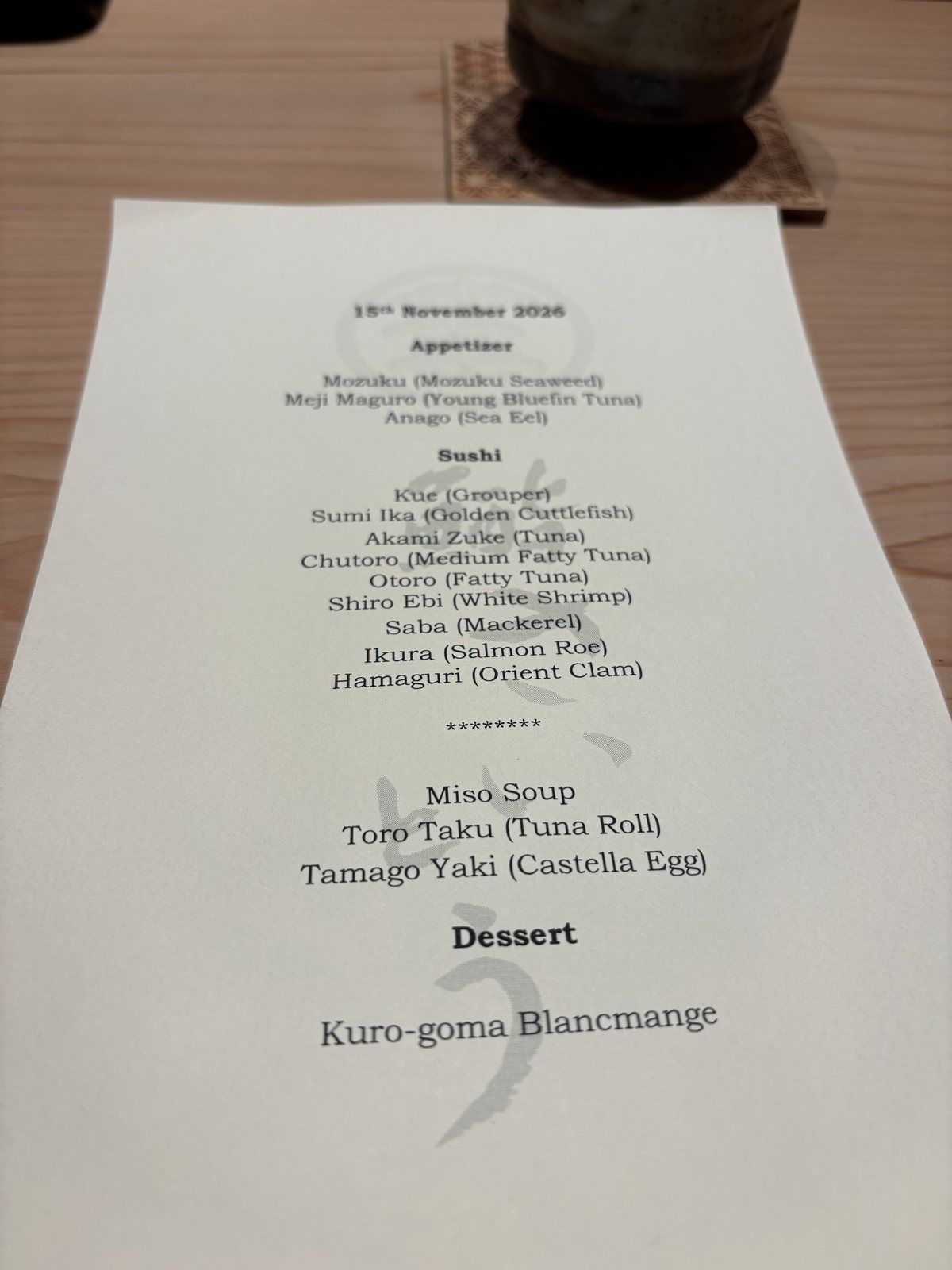
The food is excellent, and it’s omakase only. It already has one Michelin star, according to the Michelin Guide, which I think it deserves. Here’s everything from the day’s menu, with my score for each.
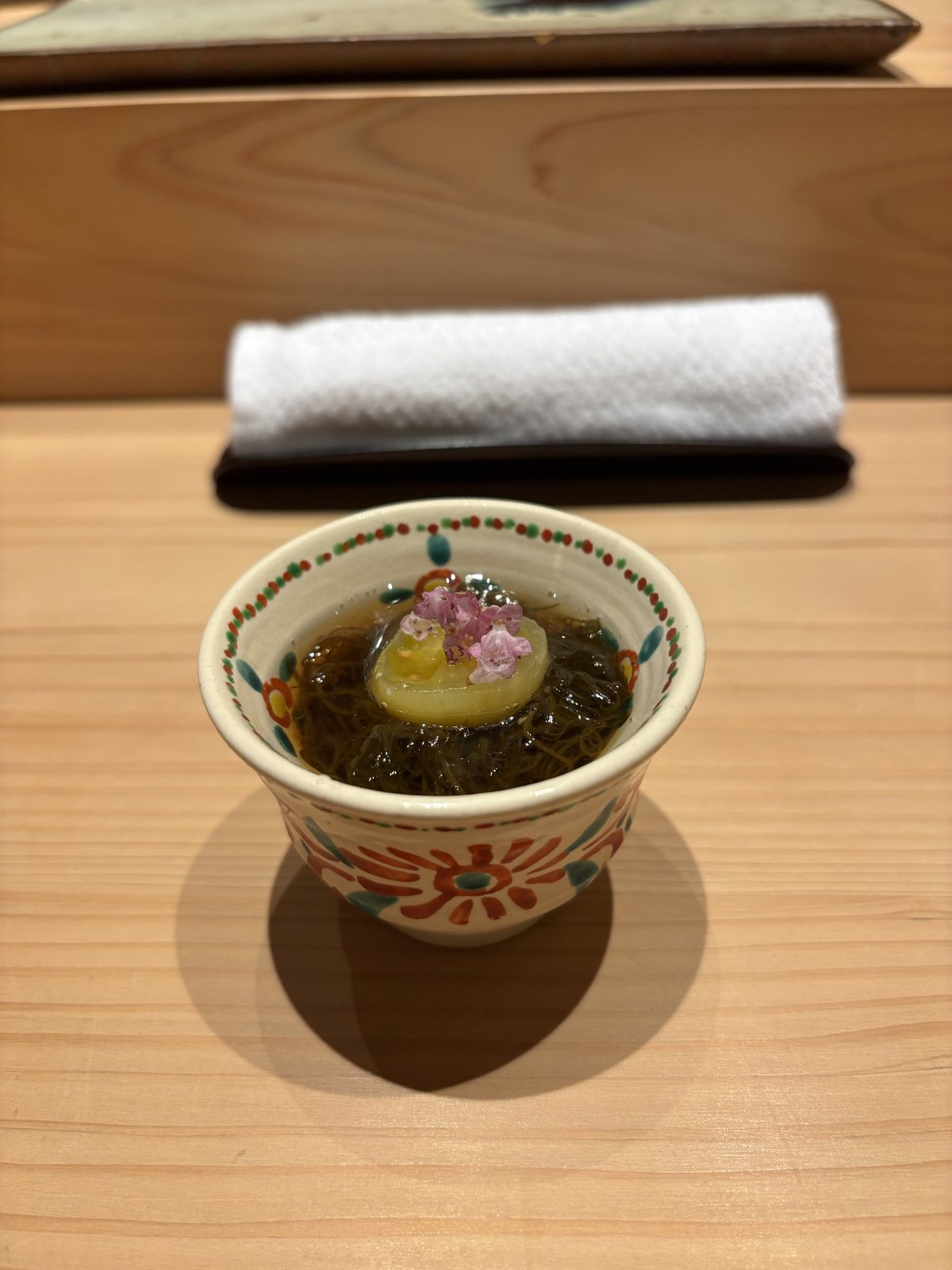
Mozuku seaweed: 8 out of 10. Tasty and fresh, though it’s a little tricky to eat if you’re not good with chopsticks.
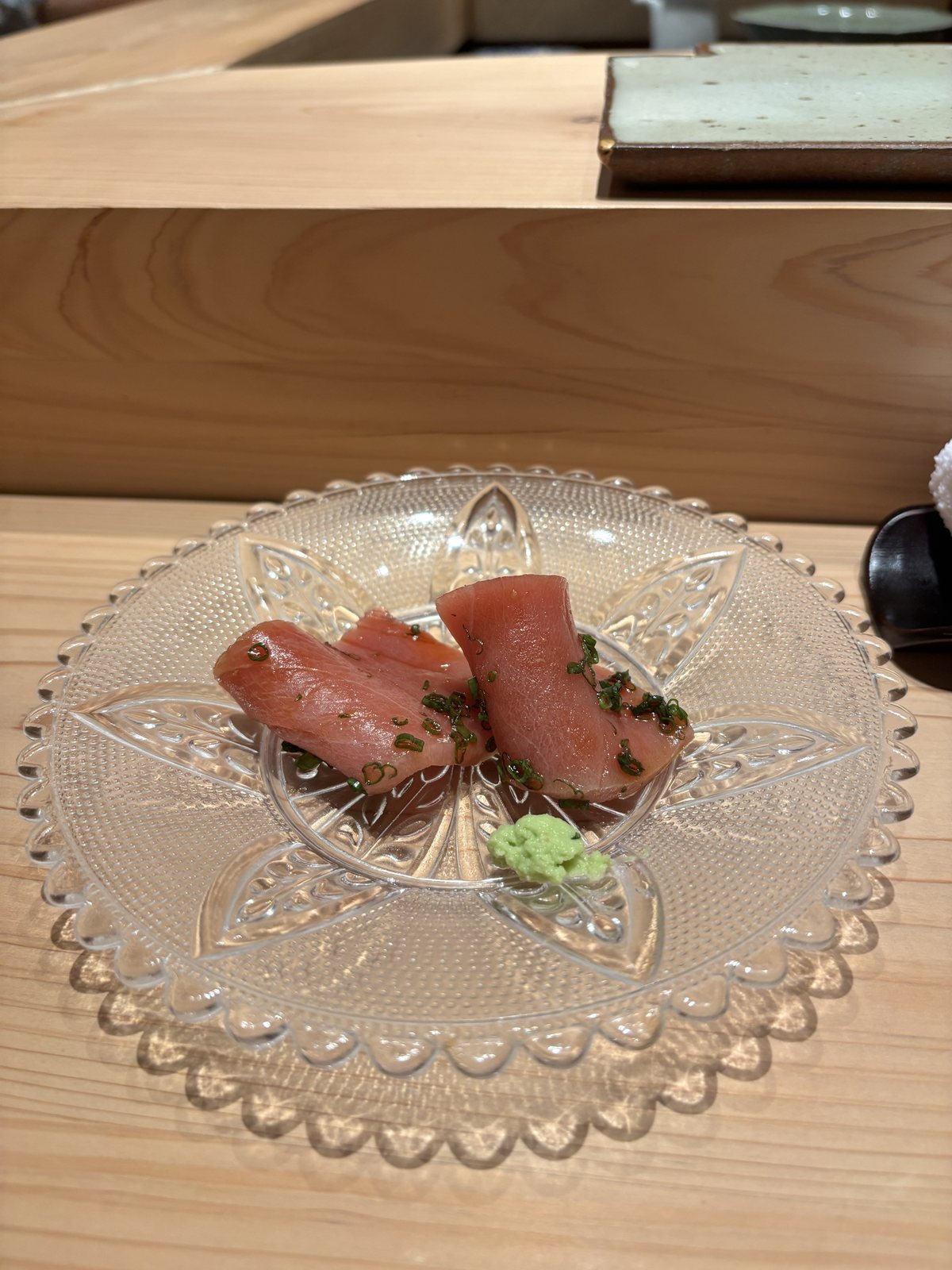
Meji maguro (young bluefin tuna): 8.5 out of 10. It was very fresh and tasty, with just a little soy flavoring.
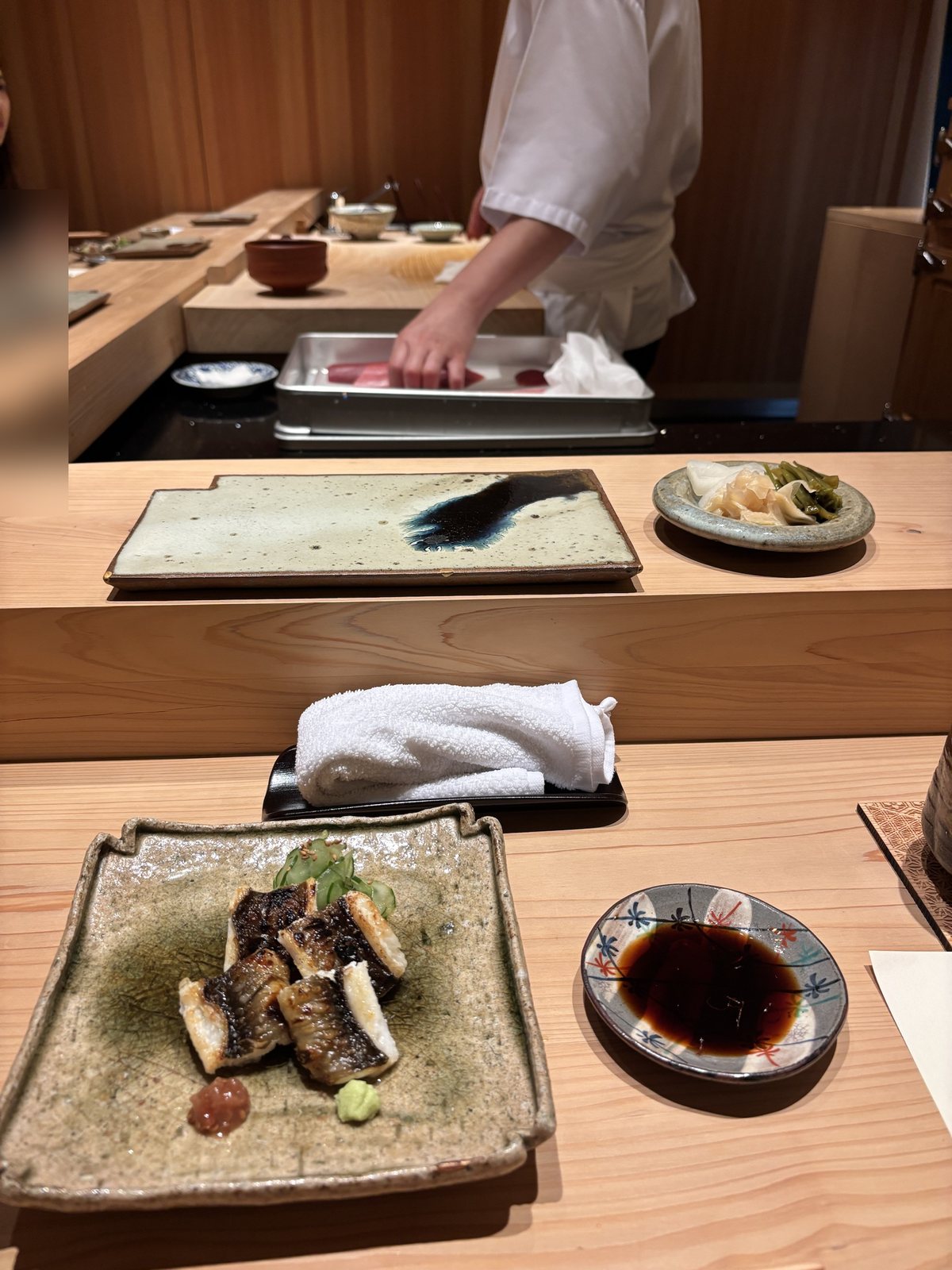
Anago (sea eel): 7.5 out of 10. It was tasty and fresh, but I think a little more seasoning would be good.
Kue (grouper): 9 out of 10. It has a nice, warm flavor, with some soy sauce flavoring.
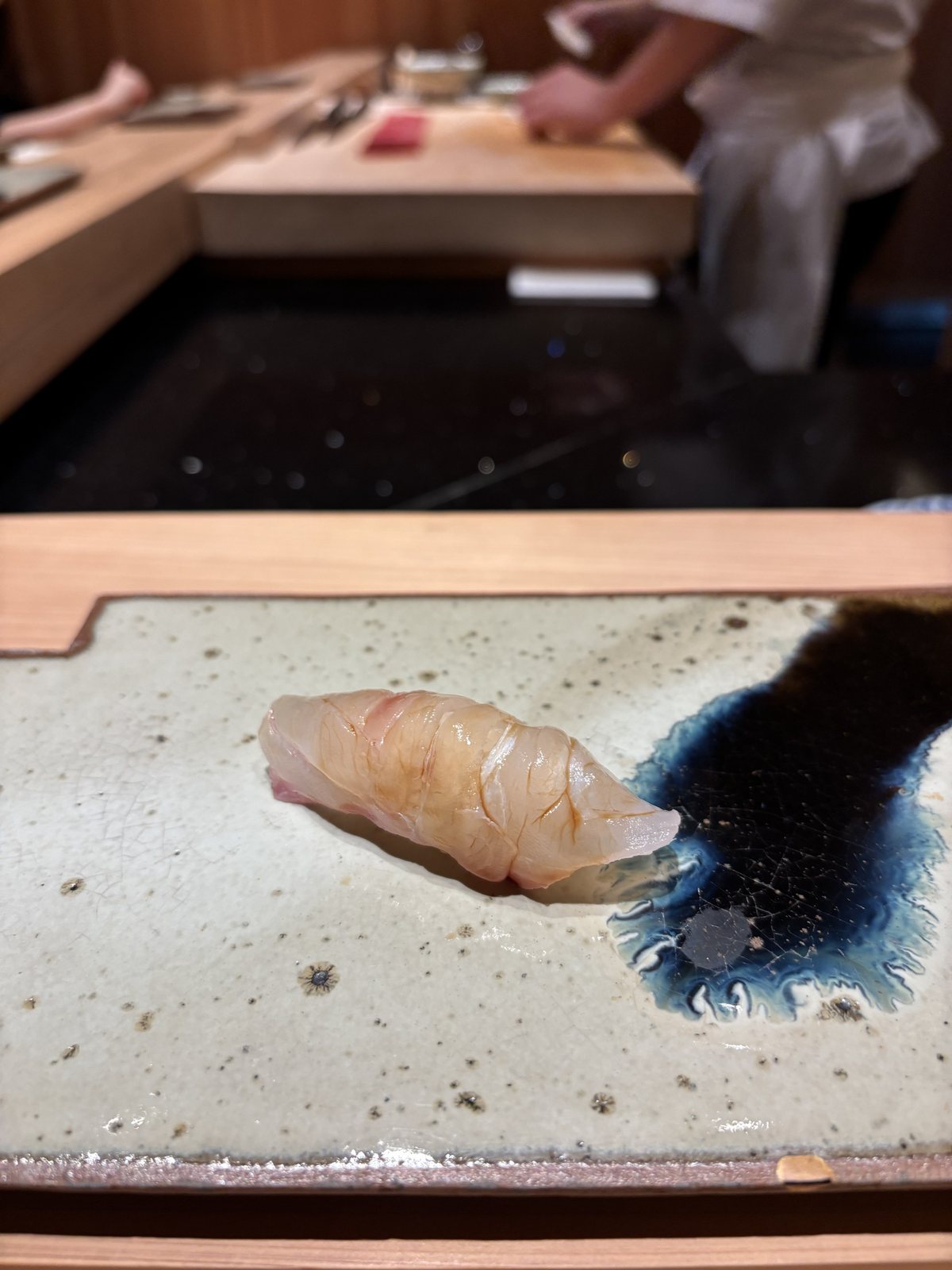
Sumi ika (golden cuttlefish): 8.5 out of 10. It was very tasty, with a sharp, fresh, cooler taste.
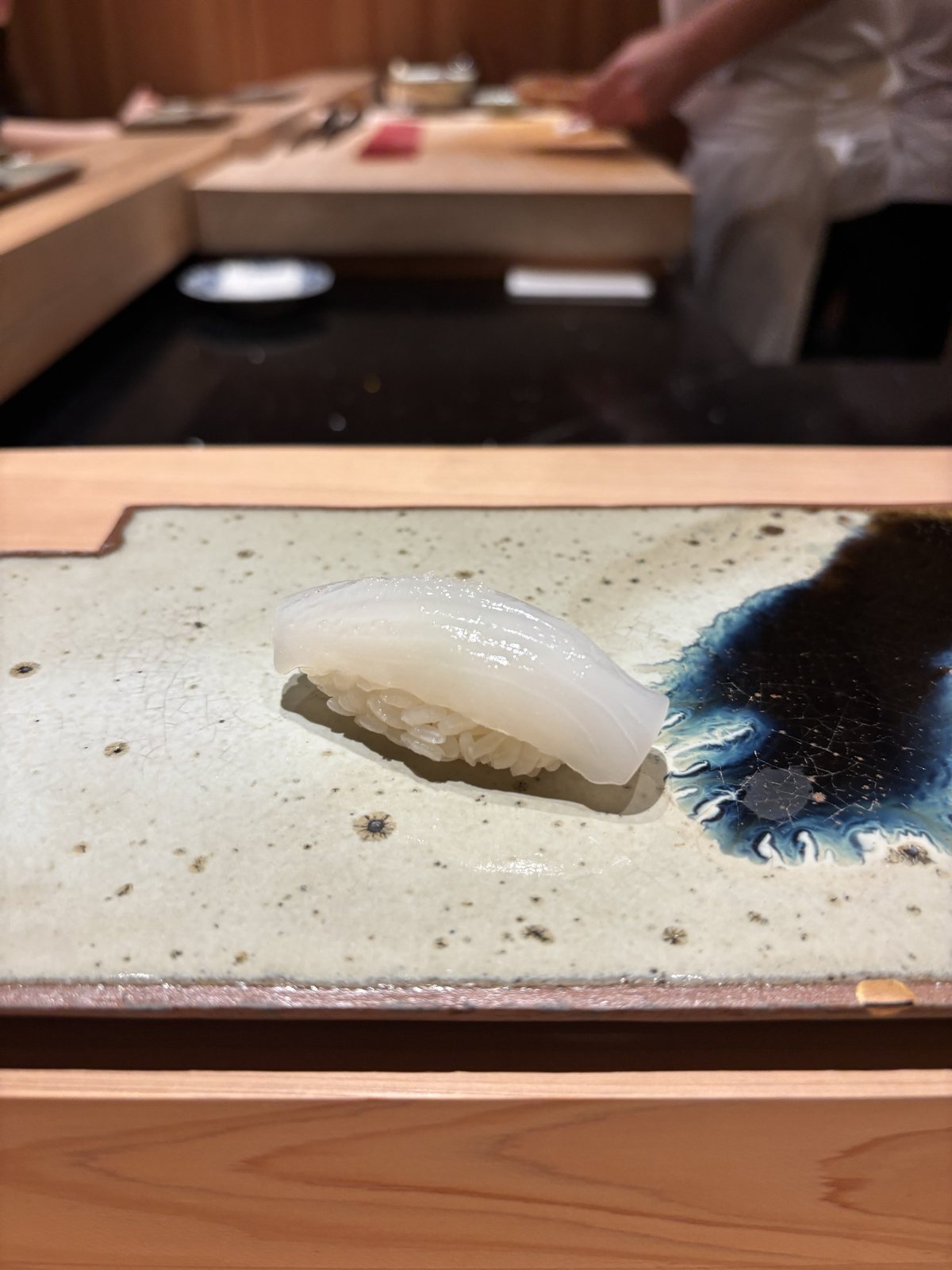
Akami zuke (tuna): 8.5 out of 10. The marinated lean tuna, and it was very flavorful and tasty.
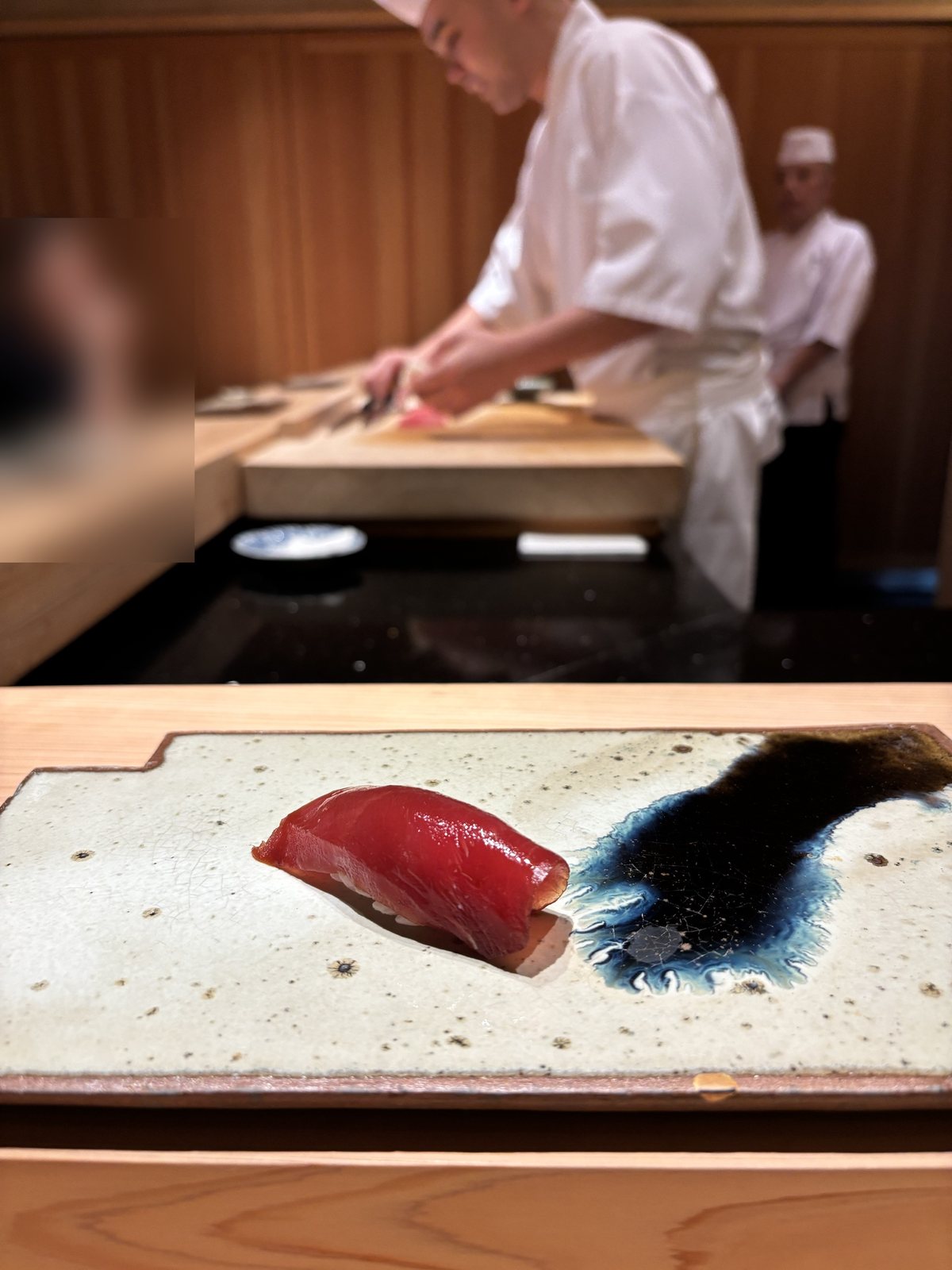
Chutoro (medium fatty tuna): 8.5 out of 10. It was very nicely made and tasty, just like the akami.
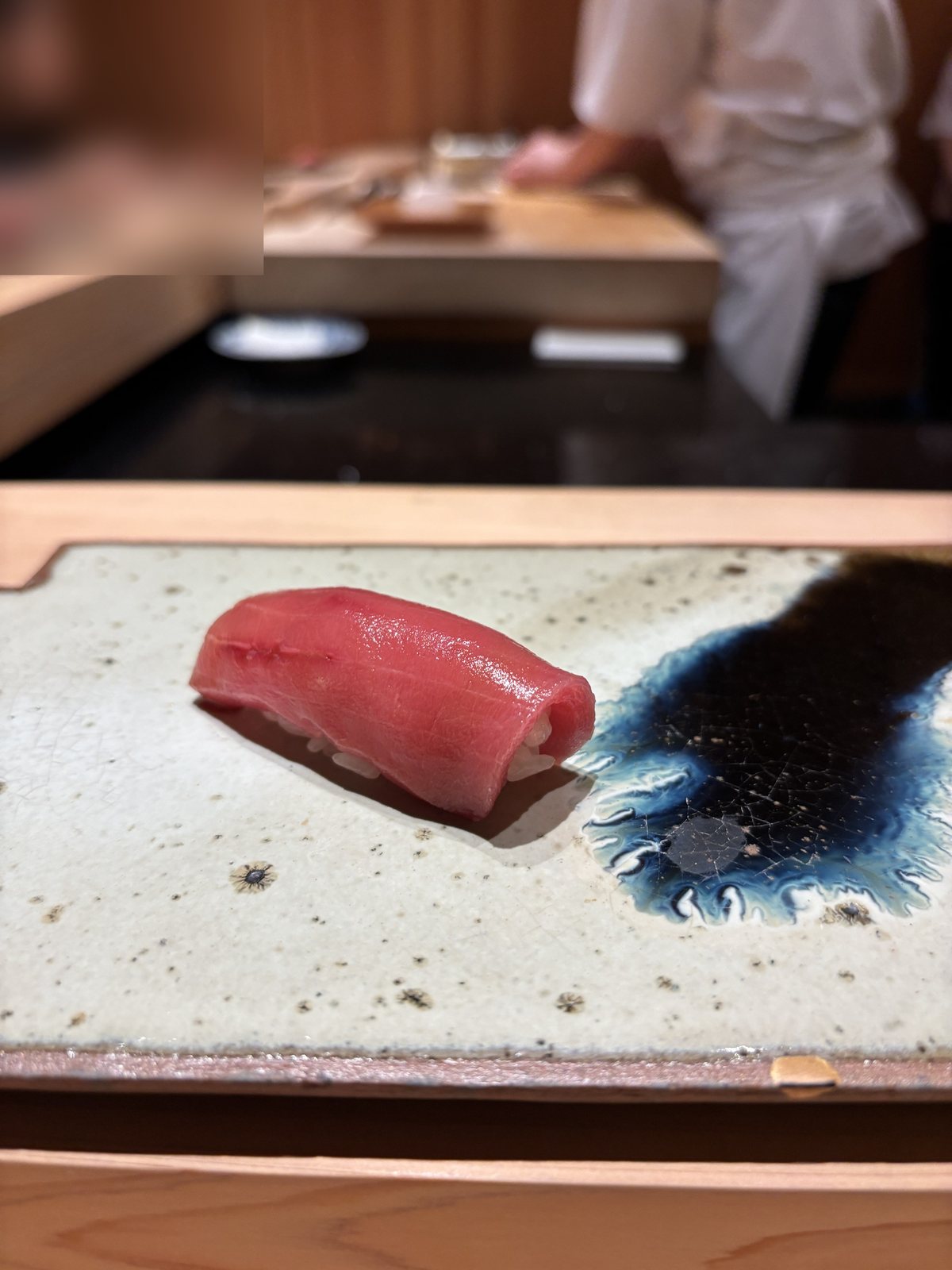
Otoro (fatty tuna): 10 out of 10. My favorite piece of the meal, and it’s super tasty: warm, with good umami, some light soy, and very nice and fatty.
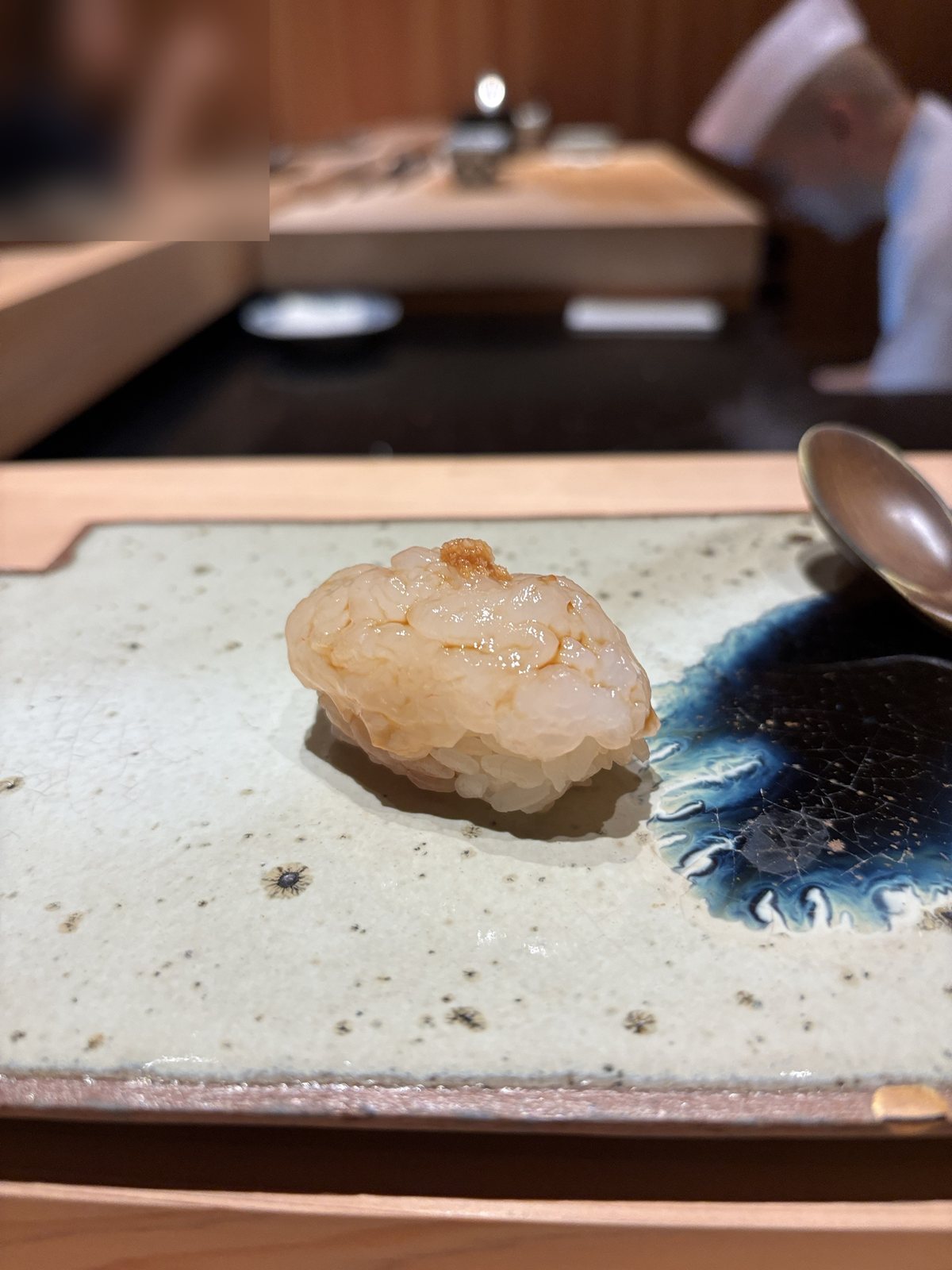
Shiro ebi (white shrimp): 9 out of 10. I normally don’t like shrimp, but this was fresh and soft, and it melts in your mouth, with a nice, sharper flavor too.
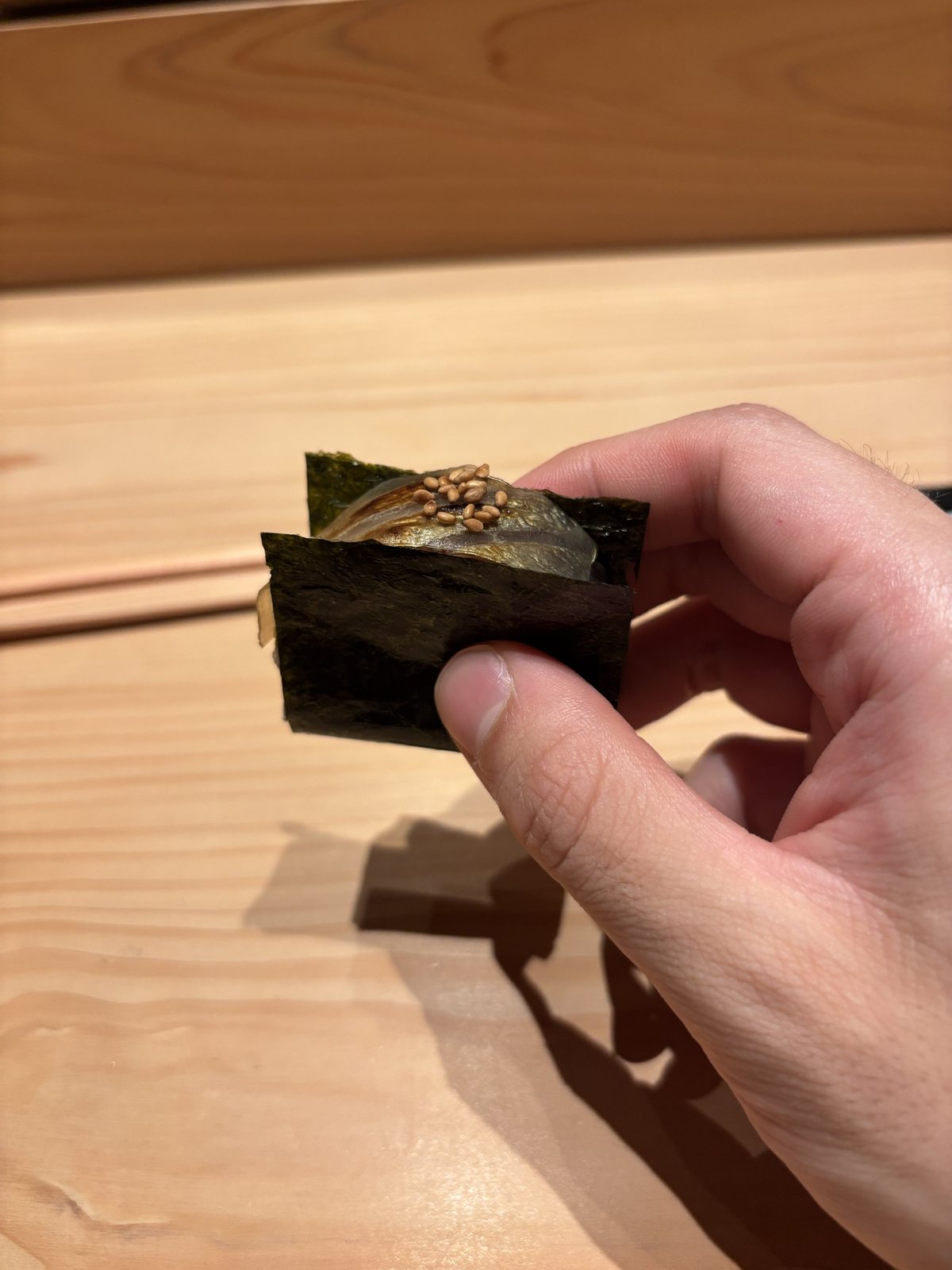
Saba (mackerel): 9 out of 10. It comes wrapped in nori with sesame seeds, and it’s very tasty, with a nice, rich taste.
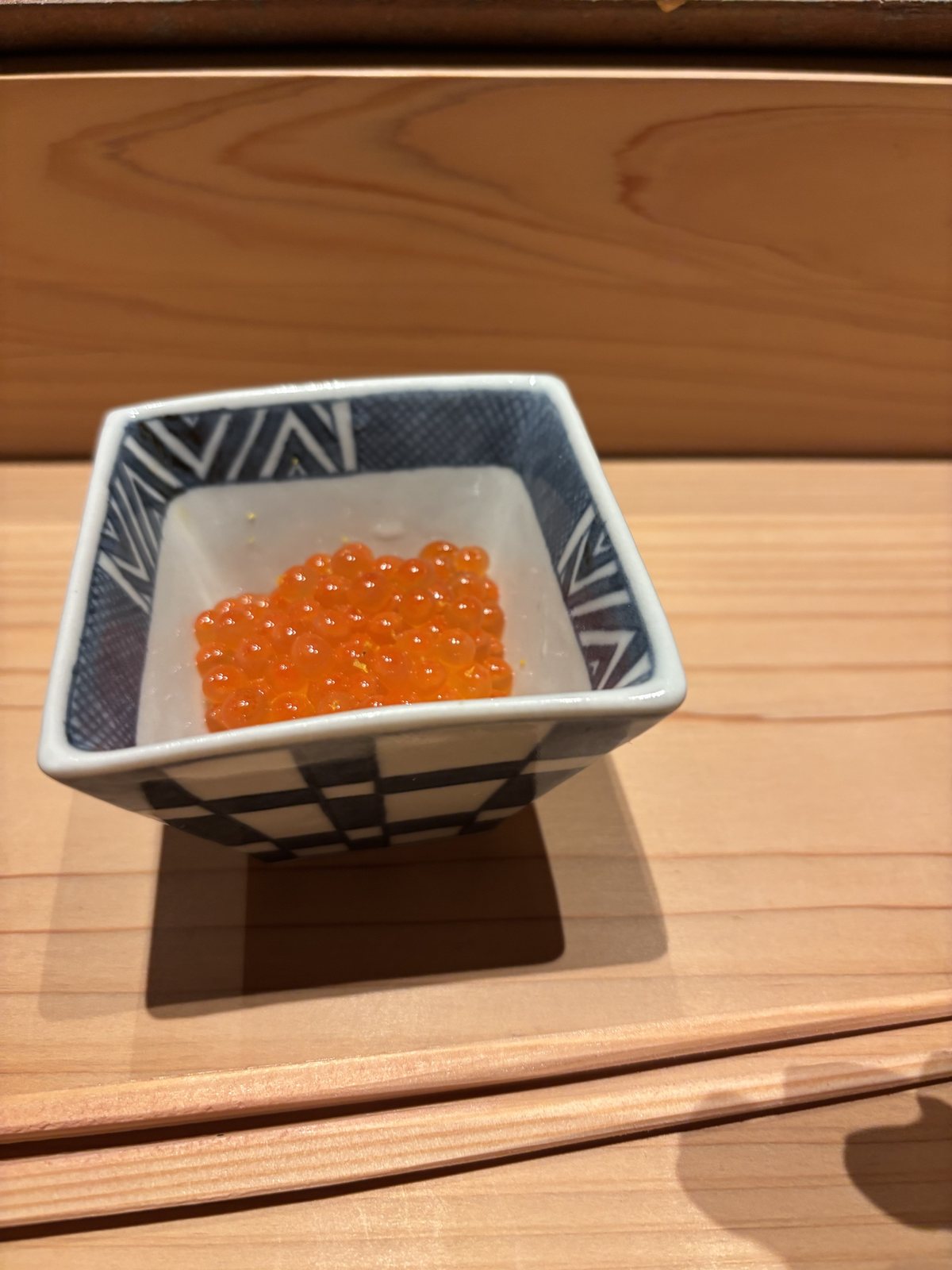
Ikura (salmon roe): 9 out of 10. It’s unique, and it comes in a small dish, so it’s easy to eat in small bites with the spoon.
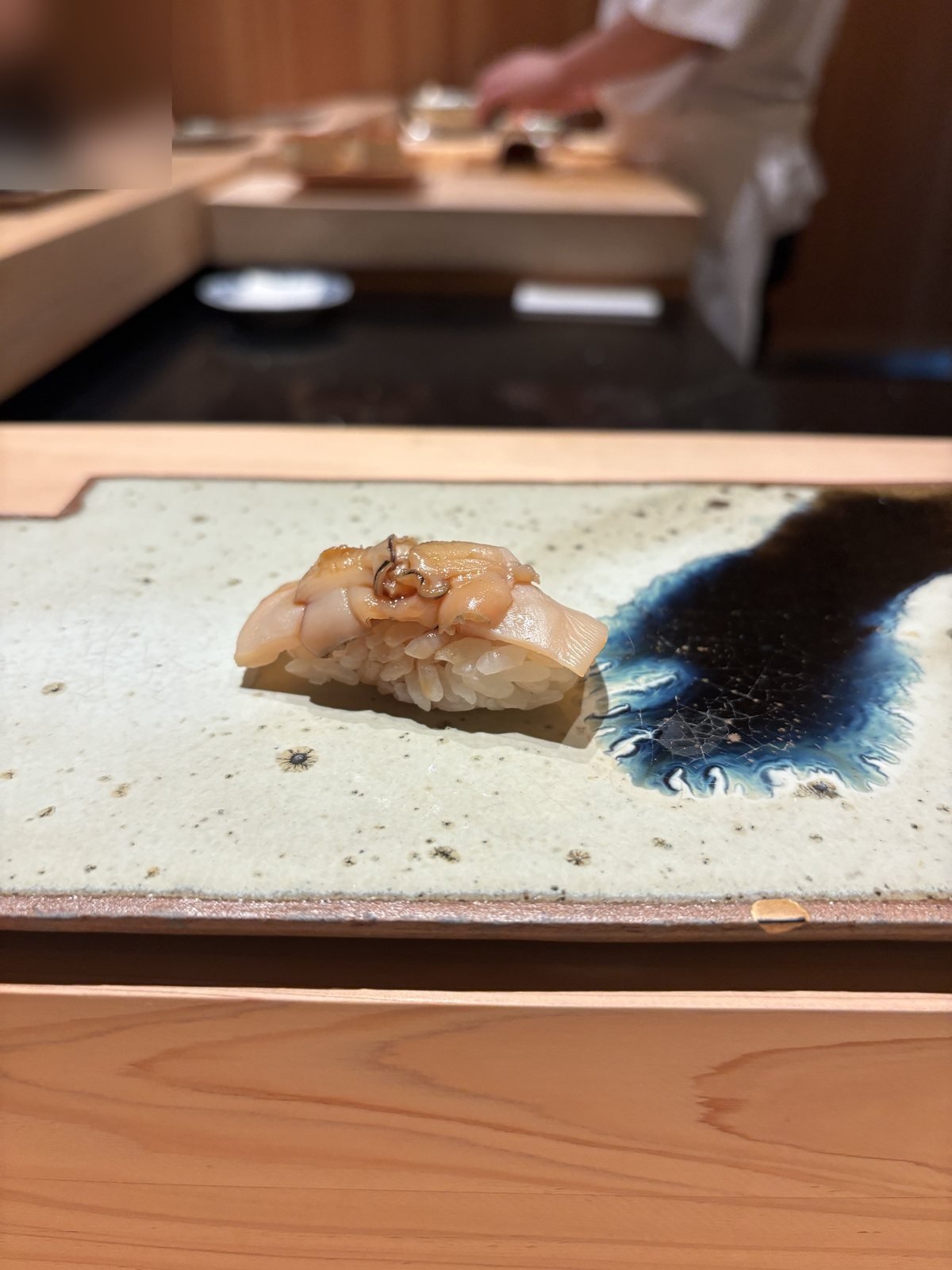
Hamaguri (clam): 8.5 out of 10. It’s served warm, with a glaze, and it was very tasty.
Miso soup. I won’t score it, since it’s not really part of the sushi, but it’s quite tasty, with a little more flavor than most.
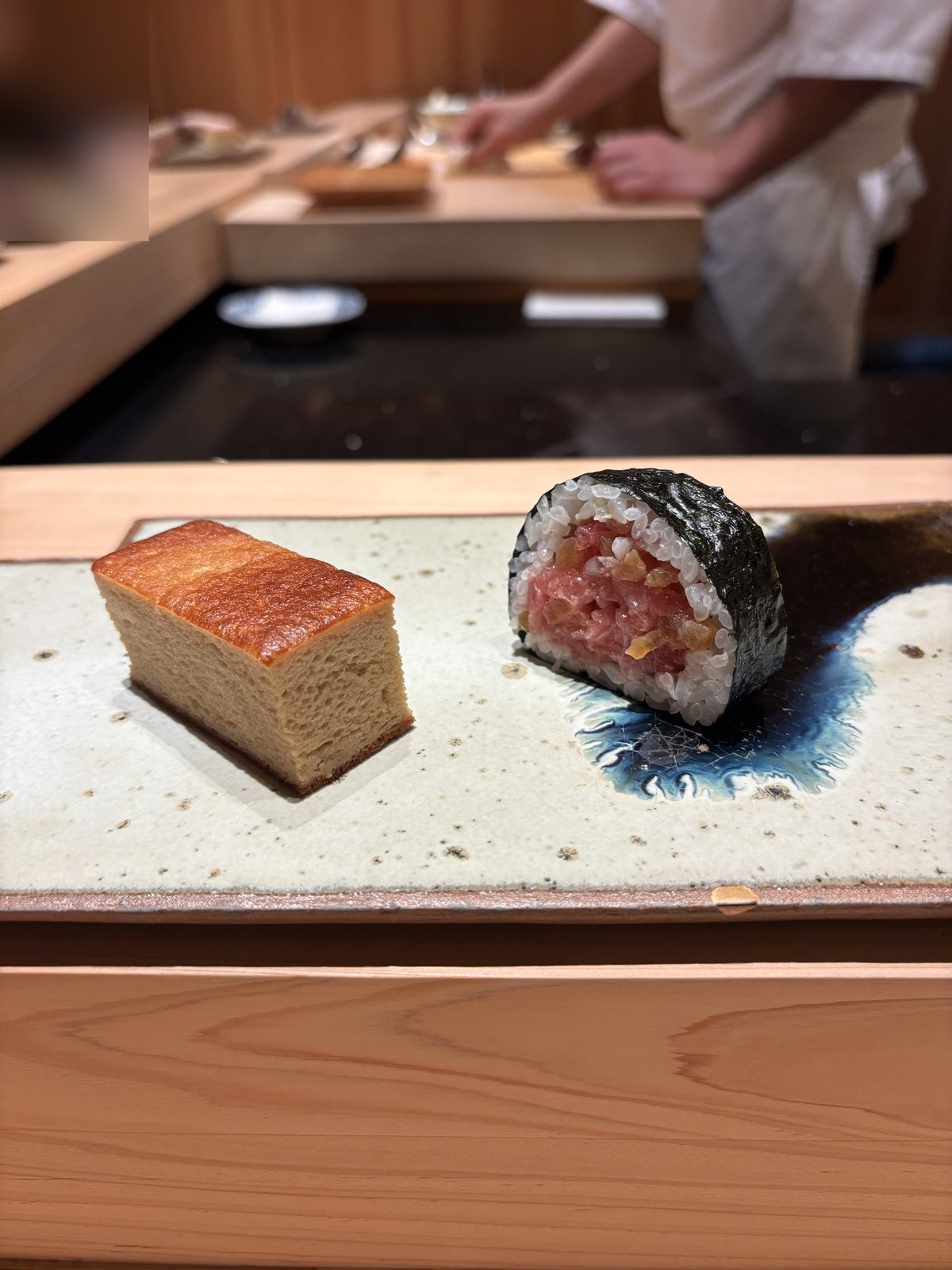
Toro taku (tuna roll): 9 out of 10. Fatty tuna rolled with pickled radish, so it’s very tasty, with a little crunch.
Tamago: 8 out of 10. It’s the castella-style egg, with a rich, deep flavor, and it’s very soft.
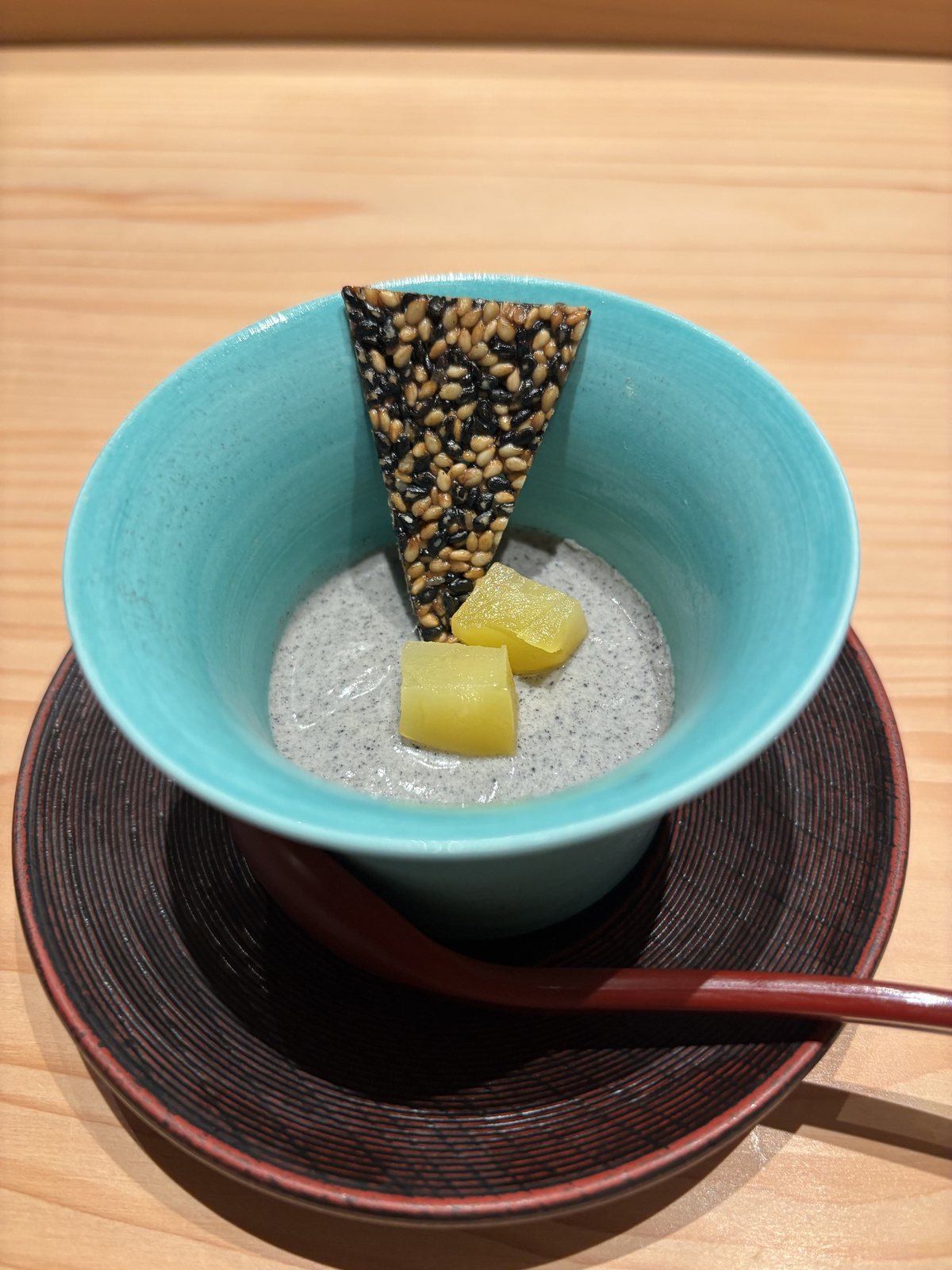
Kuro-goma (black sesame) blancmange: 7 out of 10. It was tasty, but black sesame is just not my type of flavor.
My tip: the tuna is the highlight, especially the otoro, and don’t skip the white shrimp, even if you don’t usually like shrimp.
Service: 7.5 out of 10
The service is good in the traditional, authentic Japanese sense: very attentive. The chefs are friendly and from Japan, and everything comes out in order and quickly. According to the Michelin Guide, the head chefs are Sugawara and Machigashira, and the fish is flown in from Japan several times a week.
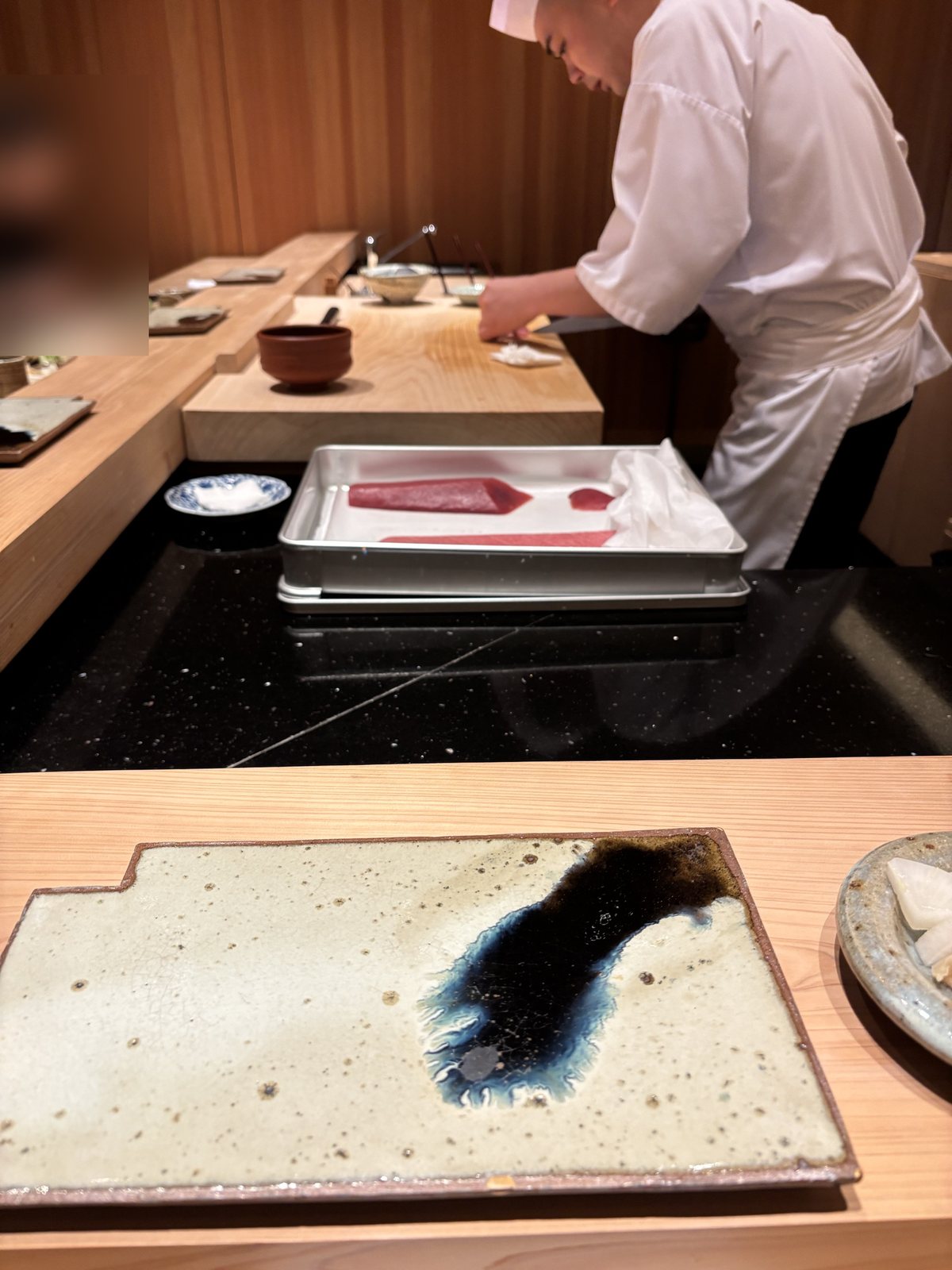
The servers, though, are quiet and traditional rather than warm, and it can feel a little overly attentive, and they also put wasabi on a few pieces after I’d asked them not to.
What it cost
฿6,826.60 for one, about $207. That’s the lunch omakase at ฿5,800, plus a 10% service charge and 7% VAT, and the green tea was complimentary. I only went for lunch, but diners report that dinner is about ฿8,500 before service and VAT, according to Omakase Go Where, so check when you book.
Value: 7 out of 10
The food is excellent, and you get a nice setting by the river, with a quiet, peaceful walk around outside. You also get the starters, the miso soup, dessert and green tea. But at over $200 for lunch, it’s quite pricey.
Vs. the others
Compared to Yamazato at the Okura, it’s similarly authentic, but even more so, with Japanese chefs and Japanese architecture. The sushi is better, and of course it’s pricier, but the riverfront setting feels more special. It’s also more authentic than Fatboy Izakaya, and even more authentic than Kisara, with quite a bit better sushi, though it’s also pricier.
At the Four Seasons itself, Palmier Brasserie is the French option, a 7.5.
Verdict: 8.5 out of 10
The sushi and the setting are the strong points: excellent, authentic sushi in a small, peaceful spot by the river. The service is more traditional and attentive than warm, and it’s quite pricey. Would I go back? Yes, for a special occasion, though there’s a lot of sushi in Bangkok, so I’d try a few others first.
For more places to eat, see where to eat in Bangkok.
This is number one of the seven in my ranking of Bangkok’s Japanese restaurants.
FAQ
Is Sushi Saito Bangkok worth it?
For a special occasion, yes, because the sushi is excellent, especially the otoro, and the setting is small and peaceful. But lunch was about $207 for one, so it’s pricey.
How much is Sushi Saito Bangkok?
My lunch omakase was ฿5,800, plus 10% service and 7% VAT: ฿6,826.60, about $207. It’s omakase only.
Does Sushi Saito Bangkok have a Michelin star?
Yes. The Michelin Guide lists it with one star, as a sister branch of Takashi Saito’s restaurant in Tokyo.
Do you need a reservation at Sushi Saito Bangkok?
Yes, definitely, since there are only seven seats at the counter. When I came at 12, there was only one other party, of three, and they let me in, but you should definitely get a reservation. According to the Michelin Guide, it’s closed on Mondays.
Where is Sushi Saito Bangkok?
Inside the Four Seasons Bangkok at Chao Phraya River, by the riverfront.
Where to stay in Bangkok: 13 luxury hotels, compared
I stayed at thirteen Bangkok luxury hotels, paid for every night and measured the noise in every room. Get the guide and new Bangkok reviews by email. Or read it now →
Where it is
Open in Google Maps ↗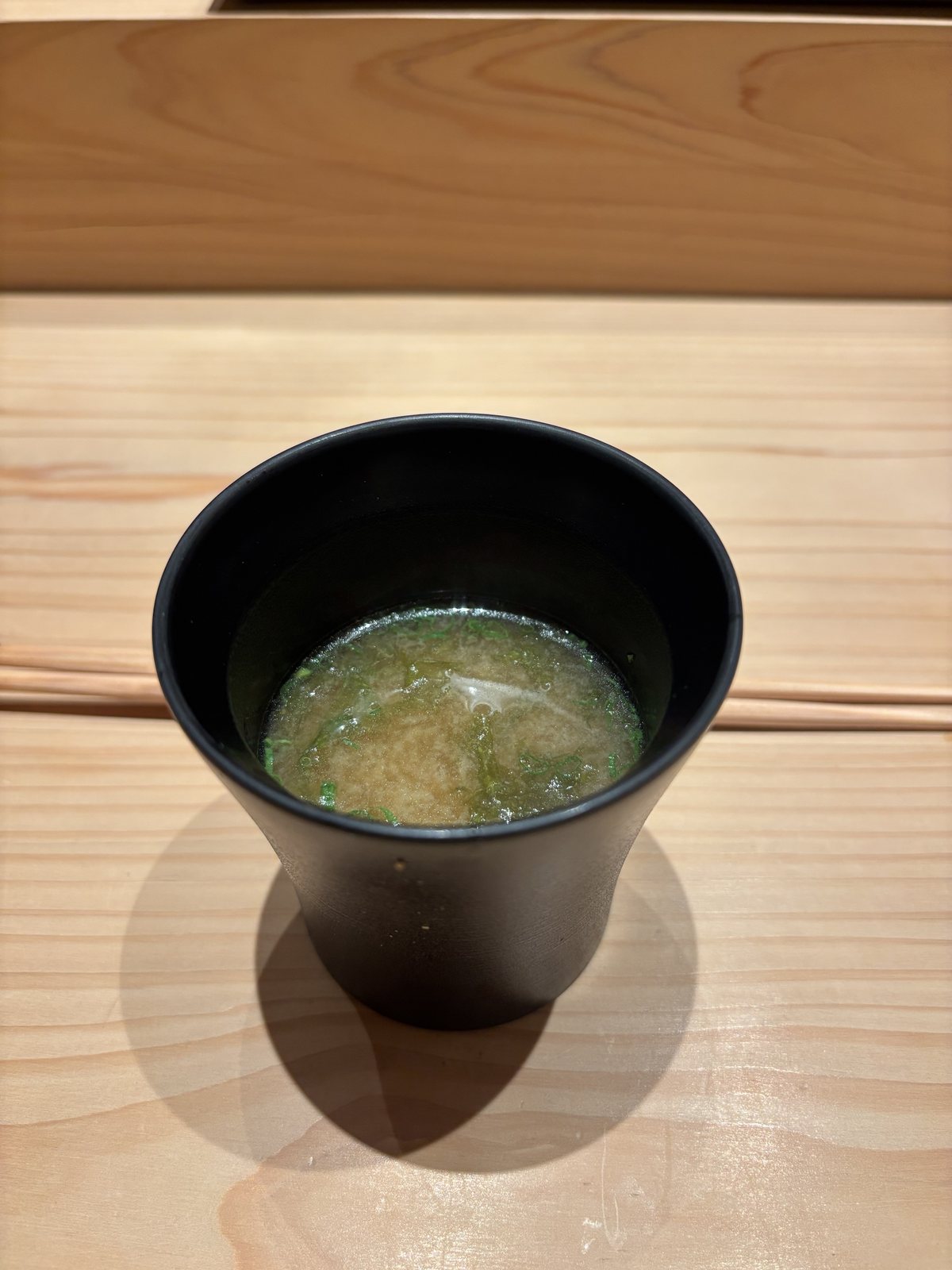
Ask me about this restaurant
Something I didn't cover? Ask, and I'll reply by email.
More in Bangkok
Everything I've reviewed in Bangkok →
 9/10Exceptional
Ciao Terrazza, Mandarin Oriental Bangkok
Bangkok, Thailand · Nov 15, 2026
Italian · $$$$
 9/10Exceptional
Gianni Ristorante, Wireless Road
Bangkok, Thailand · Nov 7, 2026
Italian · $$$
 8.5/10Excellent
Up & Above, The Okura Prestige Bangkok
Bangkok, Thailand · Nov 5, 2026
Thai, Japanese and Western (hotel all-day dining) · $$$
Where to stay in Bangkok: 13 luxury hotels, compared
I stayed at thirteen Bangkok luxury hotels, paid for every night and measured the noise in every room. Get the guide and new Bangkok reviews by email. Or read it now →